
Shopify SEO: Improve Product Page Conversions (Best Practices for 2026)
Shopify SEO: Improve Product Page Conversions is not about chasing clicks, it is about making each product page remove friction and help the right buyer decide fast. In 2026, small changes to structure, product messaging, and page clarity often create outsized results because customers expect fast, confident purchasing experiences.
Key Takeaways
| What to fix | What “good” looks like in 2026 |
|---|---|
| Product page structure | A clear journey from headline, to proof, to details, to action. |
| Buyer intent copy | Descriptions that answer questions that cause hesitation and returns. |
| Images that sell | Visuals that show scale, texture, fit, and real-use context. |
| Offer clarity | Shipping, returns, and key specs visible near the decision point. |
| Structured data rollout | Add ecommerce structured data types that match product listing and category patterns. |
| Local proof for wider pages | For Bolton and beyond, we align messaging to the journey from first click to enquiry or sale. |
- Do a page-first audit before you change anything else. Start with the flow, then content, then technical elements. (See: Shopify SEO optimisation for product pages)
- Use product descriptions to reduce returns, because inconsistent content costs sales and increases returns. (See: Proven ecommerce content marketing tactics for product descriptions)
- Match your wording to buyer intent by category so visitors land on pages that already feel relevant. (See: How to choose ecommerce SEO keywords by category)
A: When your page structure, copy, images, and offer details reduce doubt and help buyers self-qualify, more visitors complete purchase decisions.
A: We start with the buying journey flow (headline to action), then proof and specs, then media clarity.
In 2026, customers still give you only a few seconds to convince them. That is why Shopify SEO: Improve Product Page Conversions is really a conversion discipline: we reduce uncertainty, make key information easy to find, and present product details in the order buyers expect.
Note: Our approach is systematic. We use structured improvements and audit-first planning, the same way we work on client outcomes across BlueChip’s delivery.
Build a product page structure that makes buying feel simple
If you sell on Shopify, product pages either make money or lose it quickly. We treat each page like a focused conversation with a specific buyer question, not a generic product listing.
On Shopify, performance is often strong by default, and faster load times can amplify the effect of better layout and clearer content. In BlueChip’s guidance, Shopify stores are described as loading up to 2.4x faster than many other platforms, with an average render time of about 1.2 seconds. That matters because it gives your copy and media time to do their job.
Our recommended “buying journey” layout
- Clear product headline (what it is, who it is for)
- Quick proof (key benefits, compatibility notes, standout differentiators)
- Price and offer clarity (if customers cannot see it, they do not decide)
- Media that answers “what will it look like on me or in my space?”
- Specs and “decision details” (dimensions, materials, what is included)
- Trust and risk reducers (returns, delivery timelines, guarantees)
- Strong calls to action (add to cart, buy now, or start a question)
When we apply Shopify SEO: Improve Product Page Conversions principles, we are not adding noise. We are ordering information so the buyer can self-qualify without hunting.
If you want a practical checklist, use Shopify SEO optimisation for product pages as a foundation for structure, content, and technical details.
Write product descriptions that reduce hesitation and returns
Product descriptions are where confidence is built. In 2026, we still see the same pattern: shoppers abandon when product content feels inconsistent, and they return when details do not match expectations.
BlueChip’s ecommerce content marketing guidance highlights that 54% of shoppers abandon a sale due to inconsistent product content, and 71% return items due to inaccurate descriptions. That is exactly why our Shopify SEO: Improve Product Page Conversions work focuses on accuracy and buyer-aligned answers, not fluff.
The conversion-focused description framework
- Start with the “why”: the benefit that matters most to the buyer in the first 2-3 lines.
- Answer the top questions: fit, compatibility, materials, durability, and usage conditions.
- Be specific: dimensions, what is included, and any limitations.
- Use consistent language across title, bullets, and long description so expectations stay aligned.
- End with a clear next step: “Choose your size,” “Add to cart,” or “Ask us for advice.”
For Bolton brands, we also align messaging to the full journey from first click to enquiry or sale. That is what helps a visitor feel like the store understands their needs, not just the product’s features.
If you want a repeatable writing approach, reference Proven ecommerce content marketing tactics that make your product descriptions sell.
Use images that sell, not images that decorate
Images are a major decision tool. In 2026, your media must do more than show the product, it must help buyers picture ownership and avoid “surprise factor” at delivery.
That means we plan images around objections. If buyers worry about fit, we show size references. If buyers worry about build quality, we show close-ups and materials in real lighting.
Shopify SEO: Improve Product Page Conversions is tightly linked to visual clarity because the “decision details” are often absorbed faster through images than through text.
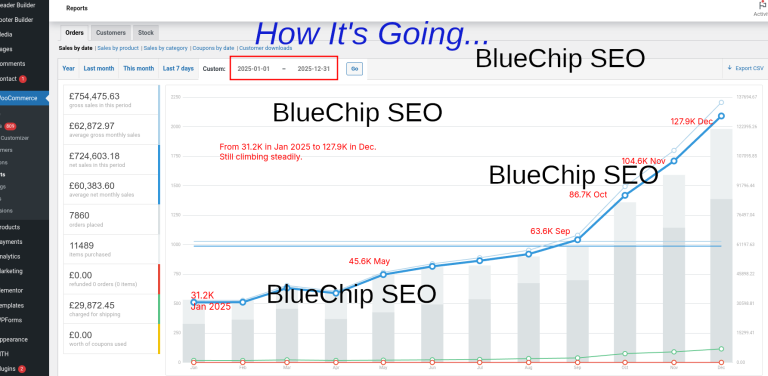
Even when images are not “product shots,” we use them to support clarity and trust, especially when we share proof of process and outcomes in performance-led stores. For that reason, we place relevant case study visuals near the sections where we talk about systematic improvements.
Image checklist for higher conversion product pages
- Hero image that clearly shows the product from a flattering, accurate angle
- Scale image (hand model, ruler overlay, or environment reference)
- Detail shots for texture, finish, connectors, stitching, and key materials
- Usage context (how it looks when installed, used, or styled)
- Variant clarity so colour and size differences do not confuse buyers
We avoid generic galleries that repeat the same perspective. Instead, we build an image order that mirrors the buyer’s internal questions.
Choose category-aligned terms so visitors arrive ready to buy
A product page converts best when the page feels relevant from the start. That is why Shopify SEO: Improve Product Page Conversions includes preparation before the page exists, especially around how you structure categories and choose buyer-intent phrases.
BlueChip’s category keyword guidance explains that top-performing category pages carry far less copy than store owners expect. The advantage is frequently not “more words,” it is choosing the right category-level terms and aligning them tightly with what buyers actually want to find.
What we do differently in 2026
- We map categories to buyer intent, then align product page wording to that intent.
- We prioritize long-tail phrases with purchase intent, not just broad discovery terms.
- We reduce misaligned traffic by matching product specs and benefits to the phrase a visitor used to find the product.
For teams thinking about a more local-led angle, this is where SEO Bolton and SEO agency Bolton conversations start to matter. Even if your store sells nationally, Bolton customers often expect practical clarity, proof, and fast answers, and that expectation shapes how the entire product page should be written.
If you want the method, use How to choose ecommerce SEO keywords by category as your practical starting point.
Add ecommerce structured data that supports clearer product display
When we talk about Shopify SEO: Improve Product Page Conversions, we also address the way ecommerce pages communicate product details. In 2026, structured data helps your store provide consistent product context across product and category surfaces.
BlueChip’s structured data guide notes that as of October 2024, roughly half of all web pages contain some form of structured data, covering around 1.3 billion URLs. It also points out that many ecommerce sites still miss richer product display opportunities. While you do not control every external display, you do control the clarity of the product information you send.
Structured data types we typically roll out
- Product and Offer to describe the item and its commercial details
- BreadcrumbList and ItemList to reflect how products sit inside categories
- Organization and LocalBusiness markup where it fits your brand presence
- Product listing alignment so category pages and product pages do not contradict each other
If structured data is new to your team, start with the guidance in Top ecommerce structured data for rich snippets.
Conversion rule: structured data should never replace good product copy and media. It supports clarity, it does not sell the product for you.
This infographic highlights the five essential SEO factors for Shopify product pages to improve conversions and search rankings. Learn how to optimize titles, descriptions, images, and internal links to boost conversions.
Turn performance and testing into a repeatable conversion system
Conversion improvements fail when they are one-off. In 2026, we recommend treating Shopify SEO: Improve Product Page Conversions like a system with clear tests, measurable outcomes, and a documented rollout plan.
BlueChip’s product-page optimisation approach focuses on structured improvements and audit-first planning. That is the difference between guessing and knowing what changes moved the needle.
Simple tests we run on product pages
- Message order test: move the strongest benefit closer to the first screen.
- Media order test: show the scale or detail shot earlier.
- Spec clarity test: add missing dimensions, materials, or included items.
- Risk reducer test: bring returns and delivery clarity nearer to the add-to-cart area.
- Variant clarity test: tighten how colour and size differences are explained.
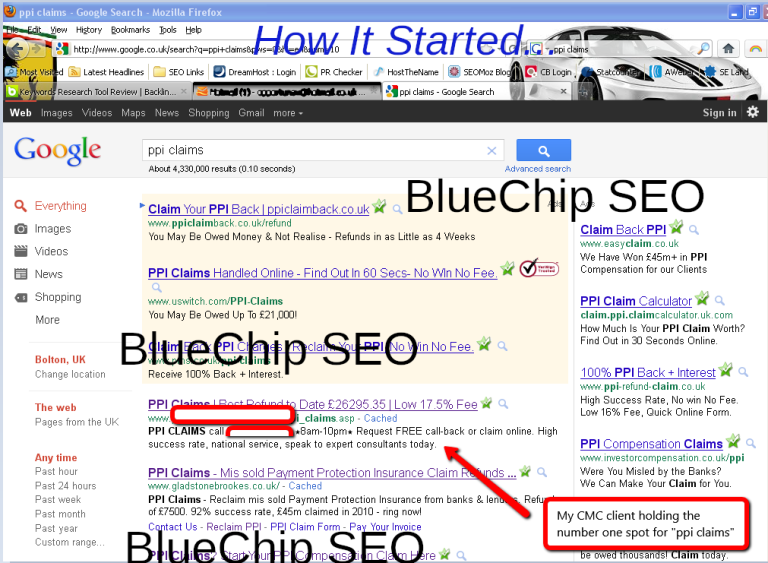
If you want to see how we think about outcomes and systematic delivery, review our Case Studies and the specific SEO case study: PPI Claims to understand how structured processes support business performance.
For Bolton operators, this is where SEO agency Bolton conversations often lead. You need a partner who can turn “best practices” into a conversion plan your team can execute.
Why local expertise still matters for national product conversion
Even if your storefront serves across the UK, local credibility shapes conversion. When customers in and around Bolton browse your product pages, they look for responsiveness, practical guidance, and proof that reduces uncertainty.
That local trust expectation is part of SEO Bolton and SEO agency Bolton positioning, but it is also a product-page tactic. We build copy and page flow that feel like a real team is helping, not just selling.
What “local expertise” looks like on a Shopify product page
- Clear buying advice (who it’s for, who it is not for)
- Transparent delivery and returns expectations presented early
- Consistent terminology between categories, product titles, and descriptions
- Branded trust signals that feel relevant to the buyer’s context
If you are choosing a partner or evaluating internal capability, our Bolton-focused guidance on selection criteria is useful. Read SEO Agency Bolton: How to choose the right local partner for serious growth.
Conclusion
Shopify SEO: Improve Product Page Conversions in 2026 is a practical workstream: we improve product page structure, write descriptions that remove doubt, use images that show what buyers truly need to know, and support product clarity with structured data where it fits. When we combine intent-aligned categories with systematic testing, conversions become repeatable instead of random.
If you want help tightening your Shopify product pages for stronger buyer decisions, reach out to our team. Visit our contact page to make contact and discuss your 2026 conversion plan.
Frequently Asked Questions
What does Shopify SEO: Improve Product Page Conversions mean in 2026?
In 2026, Shopify SEO: Improve Product Page Conversions means optimizing the product page so the right visitor can quickly understand the offer, trust the details, and take action. We focus on structure, clear descriptions, decision-supporting images, and offer clarity so buyers feel confident at the moment they choose.
How can we improve Shopify product page conversions without changing our whole store?
Start with the product page buying journey, then tighten the details that cause hesitation. For Shopify SEO: Improve Product Page Conversions, we usually begin with the order of information, rewrite high-impact description sections, and update the image sequence to answer the biggest objections.
Is structured data worth it for Shopify product pages in 2026?
Yes, when it supports accuracy and consistency, structured data can help communicate product and offer context across ecommerce surfaces in 2026. For Shopify SEO: Improve Product Page Conversions, we treat structured data as a clarity layer, not a replacement for strong copy and media.
What should a high-converting Shopify product description include in 2026?
A high-converting Shopify product description in 2026 should clearly explain the benefit, answer common buyer questions, and include accurate specs such as materials, dimensions, and what is included. This supports Shopify SEO: Improve Product Page Conversions because it reduces the gap between expectations and delivery outcomes.
How do SEO agency Bolton services help with Shopify product page conversions?
SEO agency Bolton services help by turning conversion best practices into a repeatable audit and rollout plan. For Shopify SEO: Improve Product Page Conversions, the best partners align category intent, product messaging, and page structure so buyer traffic and on-page clarity match.
Can SEO Bolton work for ecommerce stores that sell outside Bolton?
Yes. SEO Bolton principles can still improve Shopify product page conversions because local trust expectations often translate into clearer buying information and more responsive product guidance. That clarity supports Shopify SEO: Improve Product Page Conversions regardless of where your buyers live.